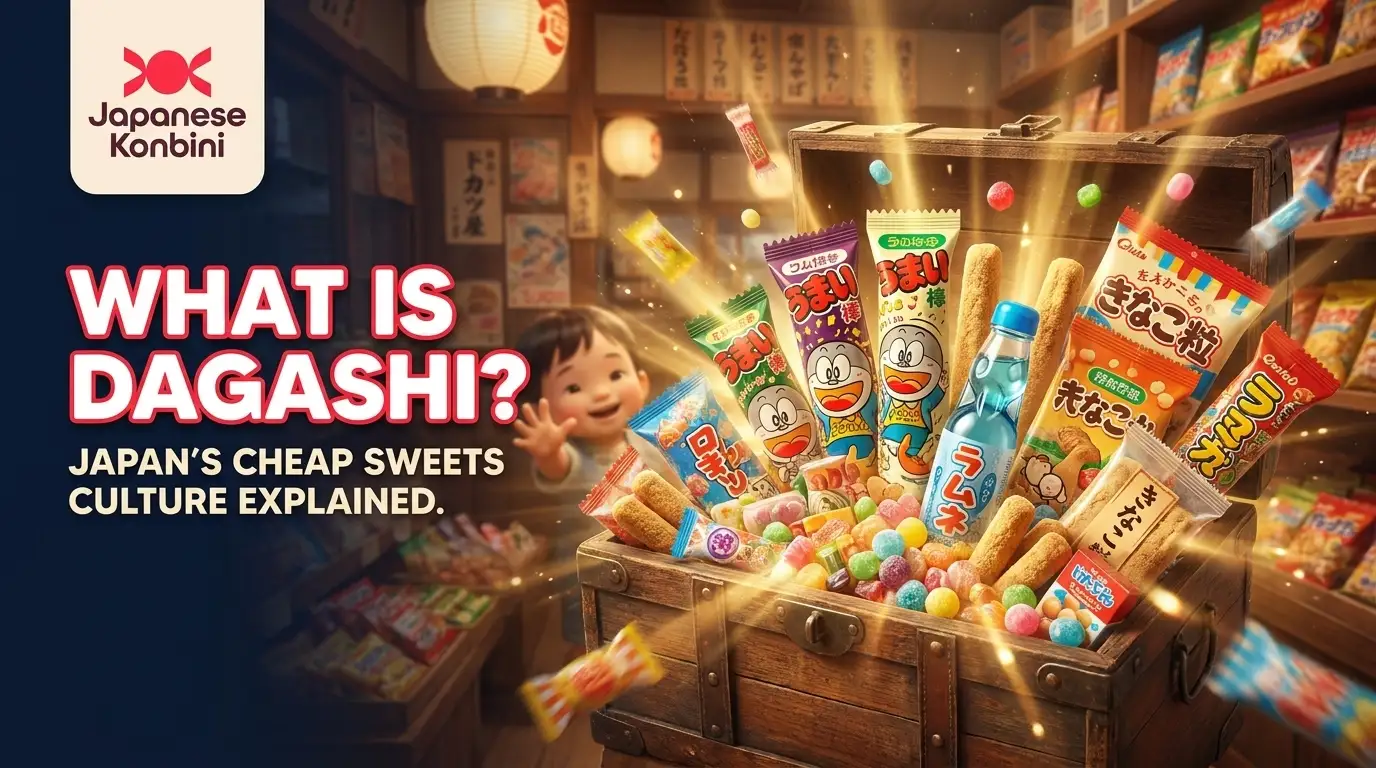
Ask ten people what the most popular Japanese snacks are and you'll get ten different lists. Pocky lands every time. Umaibo, usually. After that it depends on whether you're talking to a Tokyo office worker, a TikTok-scrolling teenager in Texas, or someone who just got back from a Lawson run in Osaka.
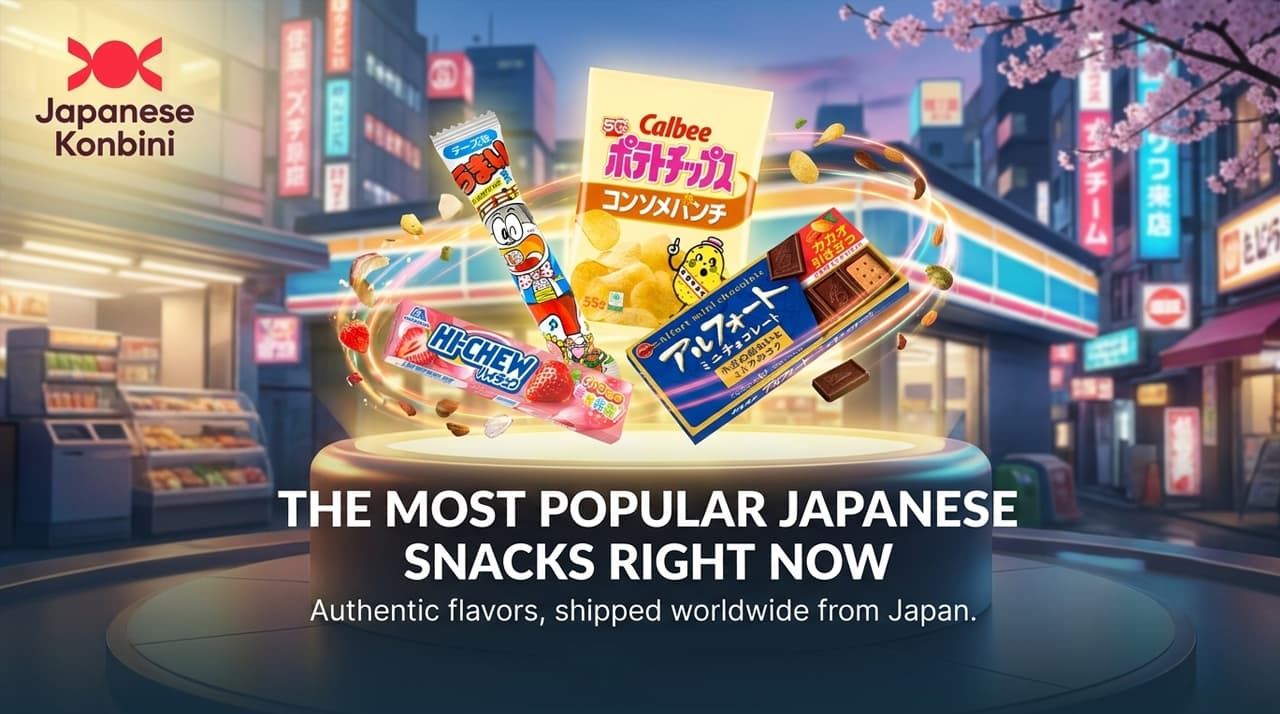
This is our ranked list of the popular Japanese snacks getting bought — and shipped overseas — right now. It's pulled from our own order data, what's trending on Japanese snack forums and Reddit, and what we keep restocking every fortnight.
What counts as a popular Japanese snack?
We're talking about snacks that are genuinely a staple in Japan — sold in every konbini, supermarket, and station kiosk — and that have crossed over enough that you can find someone outside Japan who's eaten one. That rules out the regional one-offs you'd only find in a Hokkaido souvenir shop, and the ultra-niche bean confections that don't travel well.
It also means the list skews toward dry, shelf-stable, popular Japanese snacks with at least a couple of years of mainstream presence. Bourbon Alfort biscuits qualify. The five-day-shelf-life melon pan from your local 7-Eleven doesn't.
The top 10 popular Japanese snacks right now
1. Pocky
Chocolate-dipped biscuit sticks from Glico. The default answer when anyone asks for a Japanese snack recommendation. Strawberry and Chocolate are the icons; almond crush, matcha, and seasonal limited editions rotate through every few months.
2. Umaibo
Corn puff sticks that have cost roughly 10 yen since 1979. Twenty-plus flavours from teriyaki burger to mentaiko. Cheap, cheerful, and the gateway drug into Japanese snacking for most people.
3. Calbee Jagariko
Crunchy potato sticks in a cup. The texture sits somewhere between a chip and a French fry baked into a stick. Salad and butter-soy are the staples; cheese is the cult favourite.
4. Hi-Chew
Soft fruit chews from Morinaga that hit the U.S. in the 2010s and never left. The texture is the selling point — chewy without being claggy, with a clean fruit flavour that lasts.
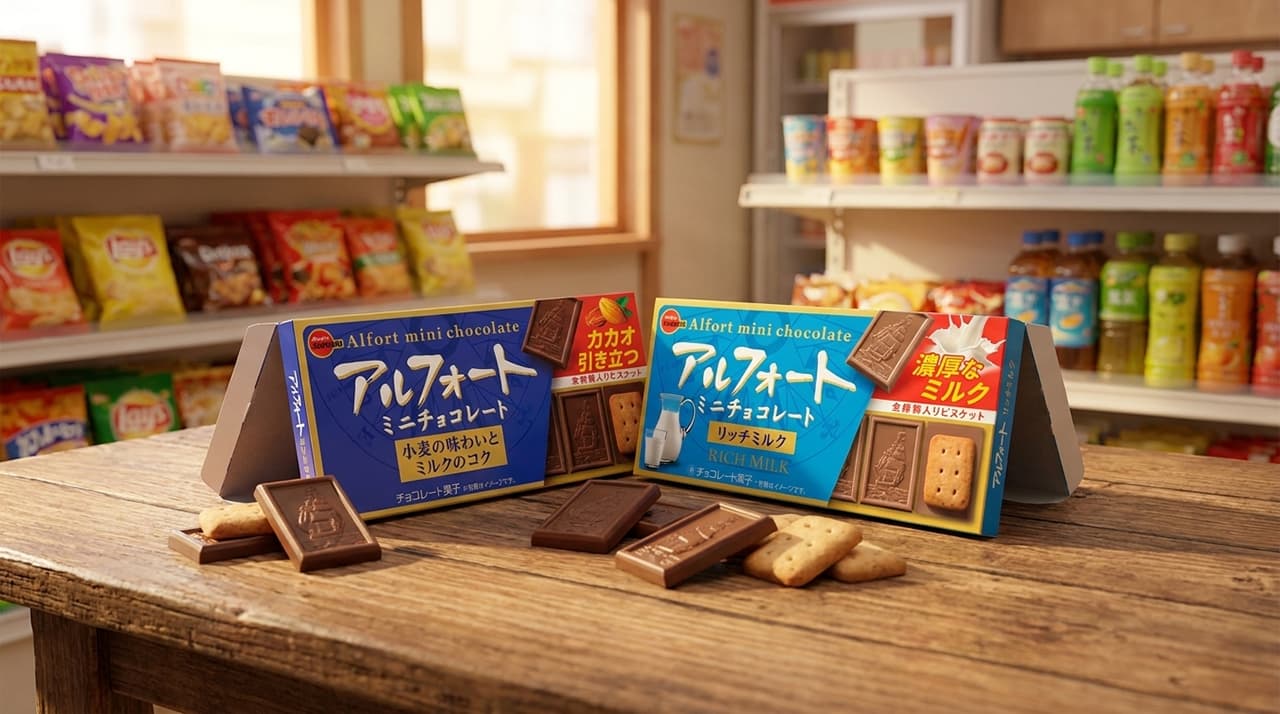
5. Bourbon Alfort
Biscuits with a moulded chocolate top embossed with a sailing ship. Vanilla and milk are the standards; rich milk and bitter rotate seasonally.
6. Pretz
Pocky's savoury sibling. Crunchy pretzel sticks in flavours like tomato, salad, and the cult-favourite roasted soy. Also from Glico.
7. Country Ma'am
Chewy chocolate-chip cookies from Fujiya. Soft texture, individually wrapped, the kind of snack every Japanese desk drawer has a stash of.
8. Jagabee
Calbee's other potato format — short, thick, almost-fries. Saltier and meatier than Jagariko. The pouch format makes it the snack of choice on long train journeys.
9. Pucca
Fish-shaped biscuits with chocolate cream inside. Smaller and crunchier than Pocky; the chocolate-to-biscuit ratio is the appeal.
10. Hi-Chew Bites & Kabaya gummies
Bite-sized chews and the soft-gummy category in general. Kabaya's Tough Gummies and Pure Gummy series sit alongside Hi-Chew Bites as the everyday Japanese sweets category.
Why these snacks blew up internationally
Three things explain why these specific snacks crossed over. First: they travel well. Dry, individually wrapped, shelf-stable for months. Second: they look distinct on a shelf. Pocky's slim red box, Pretz's sharp graphics, Umaibo's character mascots — all designed for visual cut-through in a busy konbini.
Third, and most importantly: they nailed a flavour or texture the West didn't have. Mochi-soft chews. Glassy-thin pretzel sticks. Corn-puff textures that aren't Cheetos. Once social media gave people a way to see and share these, the international demand outpaced what Japanese exporters had ever planned for.
What's trending in Japan vs. abroad
Inside Japan, the snacks moving right now skew toward seasonal regional limited editions — Hokkaido melon Kit Kats, Kyoto matcha senbei, Okinawa beni-imo (purple sweet potato) puffs. Konbini chains release a new line every couple of weeks and Japanese snack accounts on Instagram document every drop.
Abroad, the snacks getting traction are the Japanese snack foods that show up in subscription boxes and viral videos: anything mochi-coated, anything with matcha, anything that crunches loudly on a phone speaker. Hi-Chew flavour drops, regional Pocky variants, and Calbee shrimp chips are the consistent hits.
Where to buy popular Japanese snacks online
If you're outside Japan, the realistic options are: subscription boxes (great for variety, expensive per gram), local Asian supermarkets (limited selection, often Korean/Chinese versions instead), or a dedicated importer that ships direct from Tokyo. We're the third category.
Our full catalogue is over 70 authentic Japanese snacks shipped direct from Tokyo, with new arrivals every week and worldwide tracked delivery. If you've never bought Japanese snacks online before, the Pocky range from Glico is the easy entry point — everyone likes them, they ship reliably, and they're the perfect way to gauge whether you want to go deeper into the catalogue.
Already comfortable with the basics? Try the traditional Japanese snacks or rice snacks guides next — that's where the catalogue actually gets interesting.