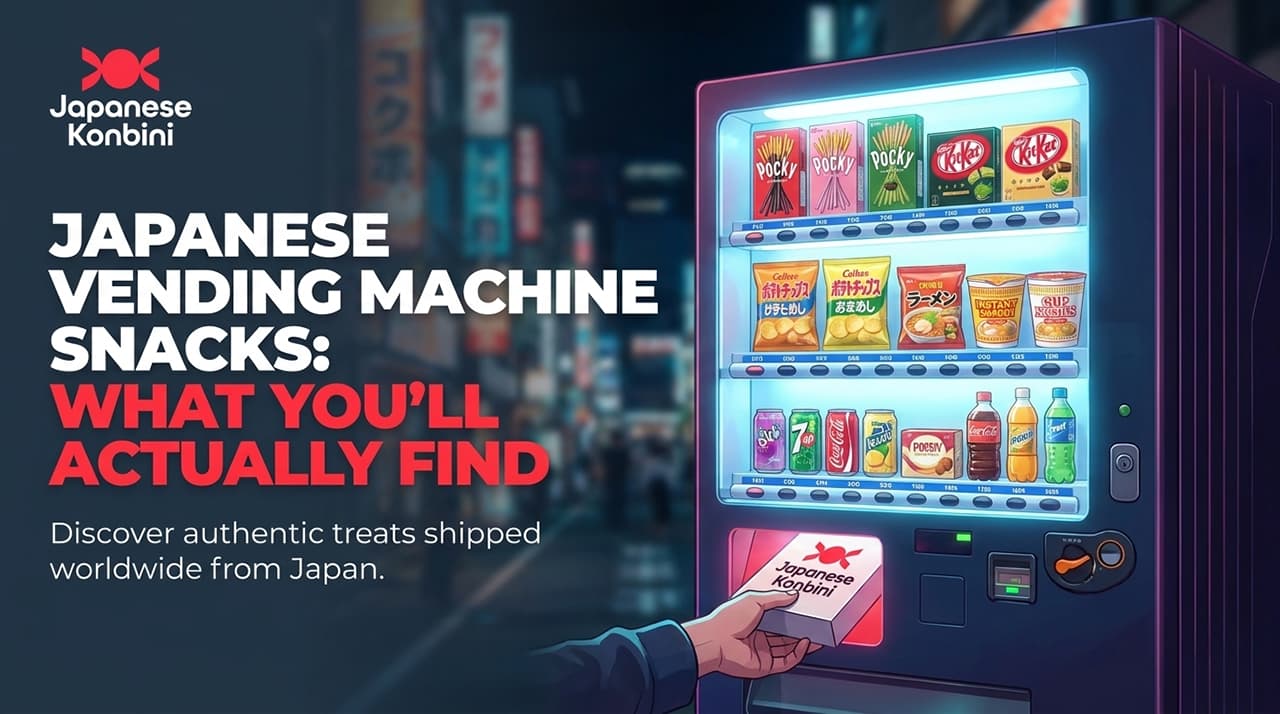
Japan has roughly one vending machine for every 25 people — about 5 million machines for a population of 125 million. Most sell drinks. A meaningful minority sell food, snacks, ice cream, hot meals, soup, dashi stock, and the occasional fresh egg.
If you've ever wondered exactly which Japanese snacks you'd actually find in a vending machine — or on the snack wall of a 7-Eleven, Lawson, or FamilyMart — this is the field guide. The viral stuff is mostly absent; the boring, dependable staples dominate.
Japan's vending-machine density
The vending machine density stat (one per ~25 people) is the most-cited number about Japan that's actually true. Climate, low crime, an aging population that's happy to install machines instead of staffing tiny shops, and a 100-yen coin that fits the price point — all of it conspires to put a machine in every train station, alleyway, and convenience-store car park.
About 92% of those machines sell drinks. The rest are split between cigarette machines (now declining), snack and ice cream machines (mostly at stations), and the headline-bait machines selling weird things (eggs, dashi, instant ramen) that exist but aren't representative of the everyday experience.
What snack vending machines actually stock
A typical Japanese snack vending machine — most commonly found on Shinkansen platforms, in office building lobbies, and near gyms — holds about 30 slots. The constants you'll see in roughly every one:
- Glico Pocky (chocolate and strawberry, occasionally almond crush)
- Glico Pretz (salad and tomato flavours)
- Calbee Jagariko (salad and cheese)
- Calbee Jagabee (light salt)
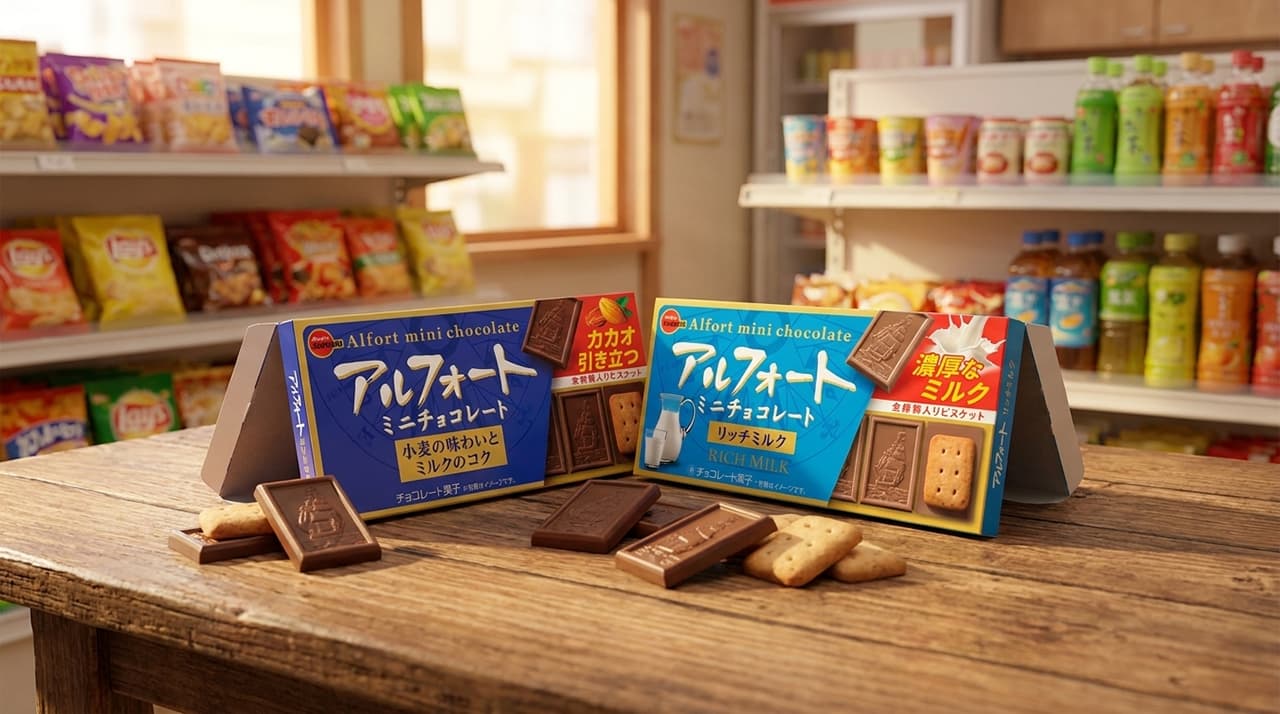
- Bourbon Alfort mini packs
- Lotte Koala's March chocolate biscuits
- Meiji Takenoko no Sato chocolate biscuits
- Kabaya Pure Gummy packs
- Morinaga Hi-Chew strawberry and grape
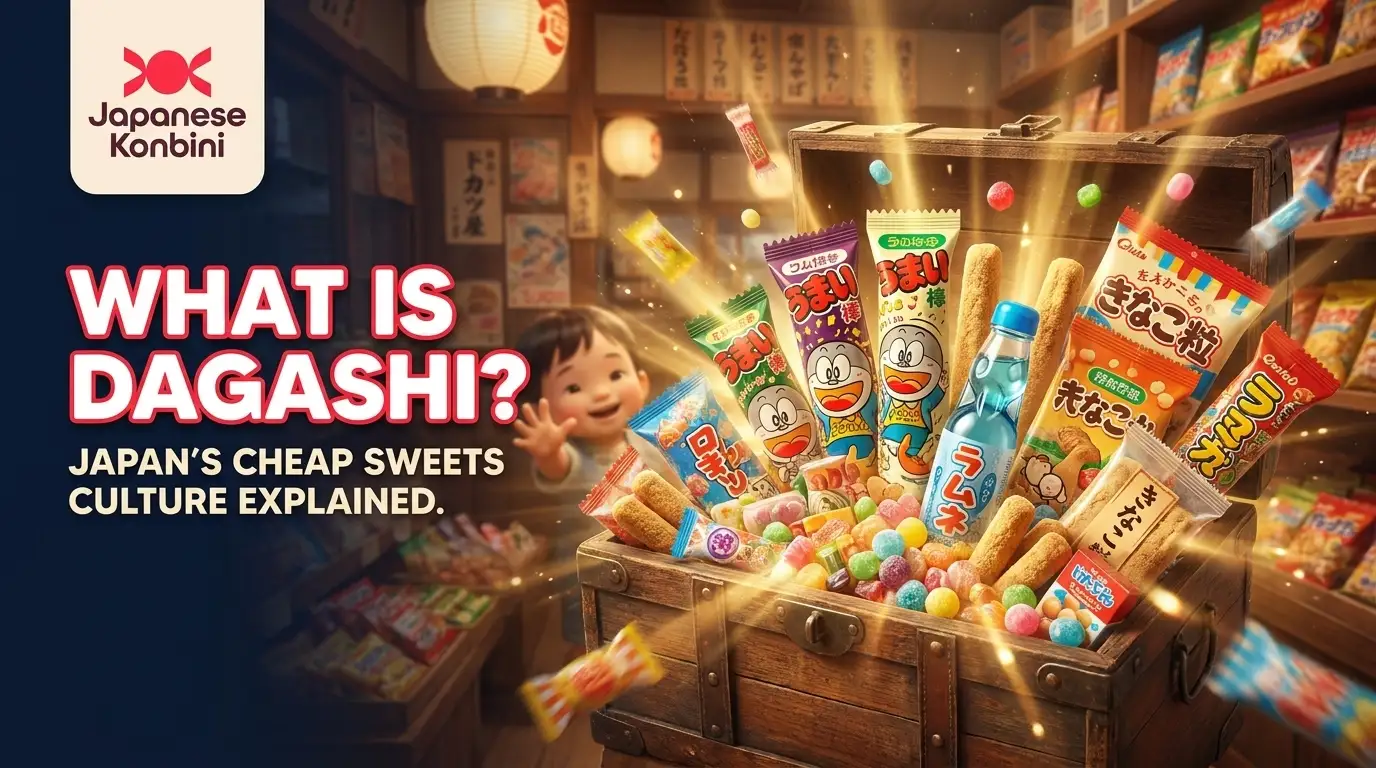
- Umaibo (in some machines, but more commonly in dagashi shops)
Konbini snack walls — 7-Eleven, Lawson, FamilyMart
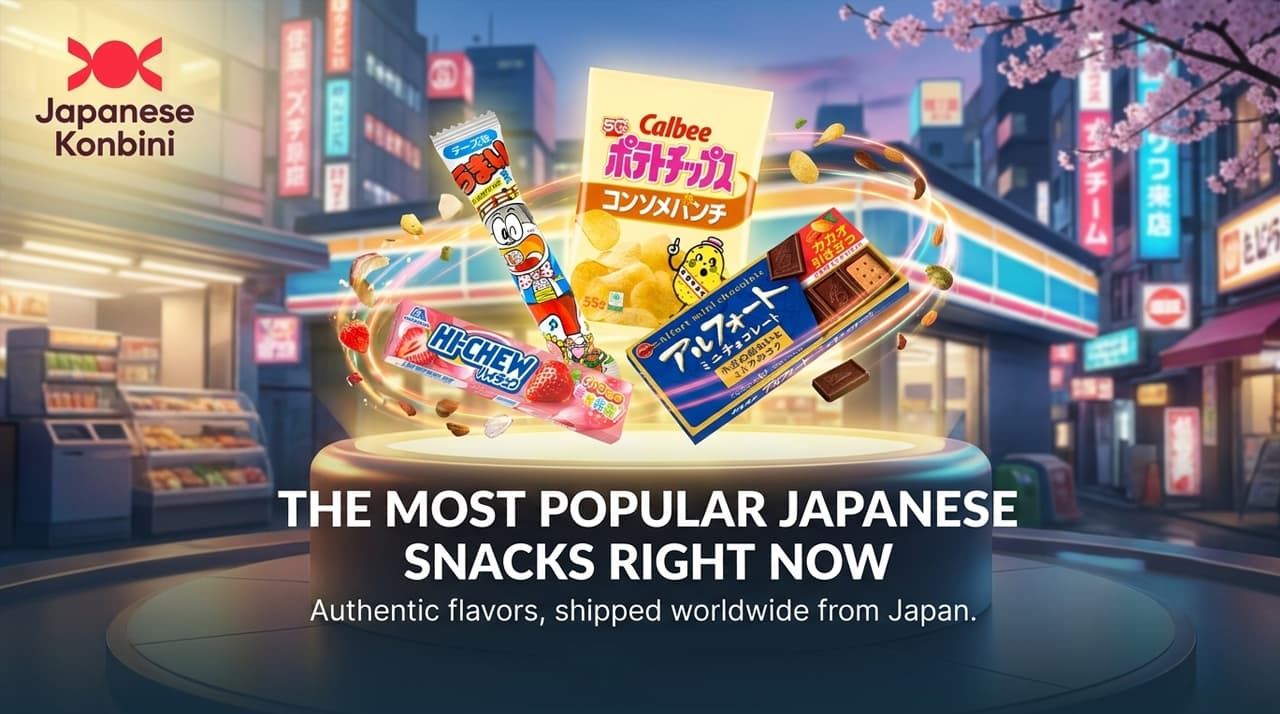
The actual snack lineup in the Japanese 7-Eleven snack wall is far bigger than what a vending machine carries — probably 200-300 SKUs versus 30 — but the bestsellers overlap almost completely with the vending machine list above. The konbini just gives you the bigger packs, the seasonal limited editions, and the in-house brand twins (7-Eleven and Lawson each have private-label versions of most of the major brands).
Lawson is generally considered the snack-heavy konbini. FamilyMart has the best chicken-y snacks (FamiChiki and the seasoned crispy snacks). 7-Eleven has the broadest dessert and pastry lineup. None of them are dramatically different on the dry-snack wall — the same Pocky, Pretz, Calbee, and Bourbon brands dominate.
Top snacks you'll see in every machine
If you only need to know five Japanese vending machine snacks: Pocky, Pretz, Jagariko, Bourbon Alfort, and a Kabaya gummy of some kind. With those five you've covered probably 60% of every snack vending machine and konbini snack wall in the country.
The next tier is the in-house and discount-brand twins — Bourbon Petit, Asahi 9000, Koikeya Karamucho — which fill out the cheaper end. And then the long tail of regional limited editions, which exist but aren't what people are actually buying day-to-day.
Regional and seasonal vending machines
Some vending machines, especially in tourist areas, stock regional limited editions that you can't find anywhere else. Hokkaido melon Kit Kats, Okinawa beni-imo puffs, Kyoto yatsuhashi mini packs, Hokkaido cheese senbei. These are great souvenirs and impossible to source outside Japan unless you know someone going.
Seasonal machines exist too — sakura limited editions in spring, chestnut/sweet potato in autumn, strawberry in winter. The seasonal limited editions are usually existing snacks reformulated with a new flavour, so if you like a brand, the seasonal versions are a safe bet.
Getting Japanese vending machine snacks outside Japan
The everyday staples — Pocky, Pretz, Jagariko, Hi-Chew, Bourbon biscuits, Calbee chips — are all in our main catalogue, shipped direct from Tokyo with worldwide tracked delivery. The seasonal regional limited editions are harder; we stock them when we can get them, but they sell out fast and aren't always restockable.
If you want the closest possible experience to walking into a Japanese 7-Eleven without flying to Tokyo, our popular Japanese snacks guide covers the top 10 you'd see on a snack-wall walk-through. Build an order from there and you've got the dependable, day-to-day, common Japanese snacks in your hands by the end of the week.