There is a snack in Japan that has cost 10 yen since 1979. Not 10 yen adjusted for inflation. Not 10 yen as a promotional price. Just 10 yen, every day, for nearly fifty years, while the world around it changed completely.
That snack is Umaibo (うまい棒), and it is one of the most quietly extraordinary things in Japanese convenience store culture.
What is Umaibo?
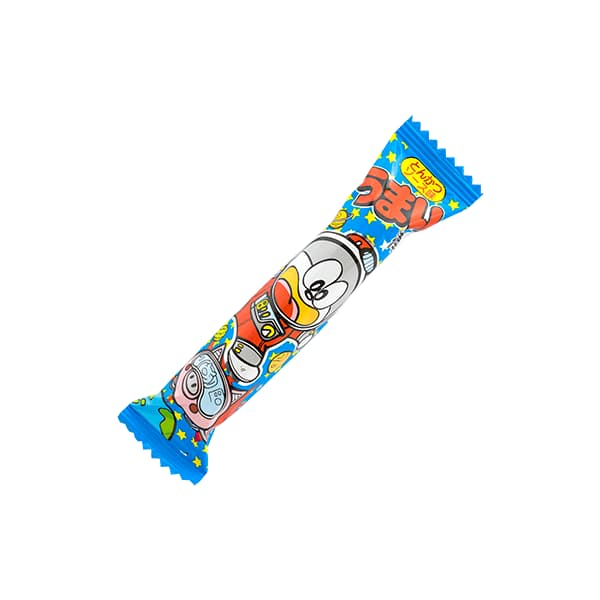
Umaibo is a puffed corn snack made by Yaokin, a Tokyo-based confectionery company that has been making cheap, cheerful dagashi since 1954. The name translates roughly to "delicious stick" — umai (うまい) meaning delicious, bō (棒) meaning stick — and it does exactly what it says on the packaging. Which is to say, it is a hollow cylinder of flavoured corn puff, about 11 centimetres long, that costs less than most things you can legally purchase.
At 10 yen (roughly 6–7 cents at current exchange rates), Umaibo is a rounding error on most budgets. This is entirely the point. Umaibo belongs to the world of dagashi — Japan's category of cheap, nostalgic, children's sweets sold for small coins at neighbourhood sweet shops. But unlike most dagashi, which remain niche and nostalgic, Umaibo has transcended its origins. It's sold in every konbini, every supermarket, every vending machine. Adults eat it unironically. Offices stock it. It has a character mascot, an official museum, and a fan base that debates flavour rankings with genuine intensity.
A brief history of 10 yen perfection
Yaokin launched Umaibo in 1979 with a handful of flavours. The price was set at 10 yen to make it accessible to every child in Japan, and Yaokin made a quiet commitment to hold that price regardless of what happened to the cost of ingredients, energy, or production.
They held it for over forty years.
In 2022, rising global commodity prices finally broke the streak. Umaibo increased in price for the first time in its history — to 12 yen. The internet responded as if a national monument had been defaced. Newspapers covered it. There was genuine public mourning. This tells you everything you need to know about what Umaibo means to Japan.
The snack now comes in over 20 official flavours, with regional limited editions rotating throughout the year. Cheese, mentaiko, salad, natto, takoyaki, corn potage — the range is broad enough to be its own snack ecosystem.
The four flavours worth starting with
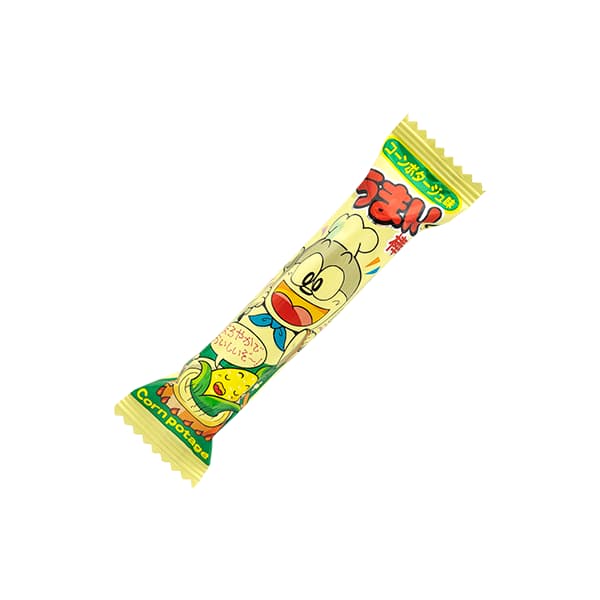
Umaibo Corn Potage
If you want to understand Japanese snack culture in a single bite, start here. Corn potage — a thick, sweet, creamy corn soup — is one of Japan's most beloved comfort flavours, and Umaibo has distilled it with almost alarming accuracy into a hollow corn stick. It is warm-tasting even at room temperature, gently sweet, and deeply savoury at the same time. It is also, notably, the flavour most likely to make someone say "wait, how is that so good" while immediately reaching for another one. The quintessential Umaibo. Begin here.
Shop Umaibo Corn Potage
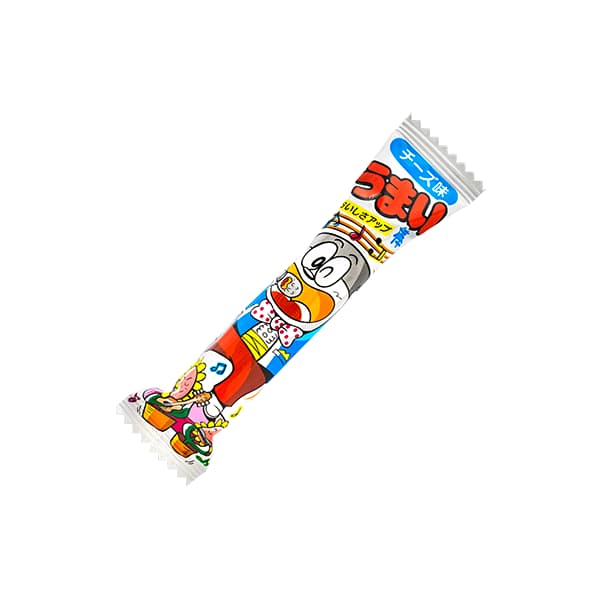
Umaibo Cheese
The most universally approachable of the range. Japan's processed cheese flavour profile is its own distinct thing — slightly tangy, intensely savoury, with a richness that bears only a passing resemblance to the actual cheese it's named after. This is not a complaint. Umaibo Cheese exists in a perfect equilibrium: light enough to keep eating, flavourful enough to keep wanting more. It is also, anecdotally, the flavour most frequently stolen from shared office snack bowls.
Shop Umaibo Cheese
Umaibo Tonkatsu Sauce
Tonkatsu sauce — the thick, sweet, Worcestershire-based condiment served alongside Japan's beloved breaded pork cutlets — is one of those flavours that tastes exactly like its name and somehow better than you'd expect. This Umaibo captures that sweet, tangy depth and wraps it around a light corn puff in a way that makes absolutely no sense in theory and complete sense in practice. It's the flavour that converts people who claim they don't like flavoured snacks.
Shop Umaibo Tonkatsu Sauce
Umaibo Mentaiko
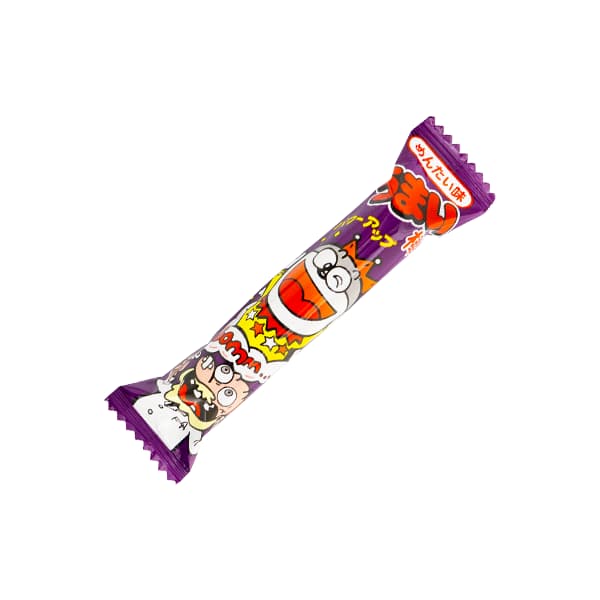
Mentaiko — spicy marinated cod roe — appears throughout Japanese cuisine with almost aggressive frequency. On pasta, in onigiri, on toast, in crisps, and yes, on an 11cm hollow corn stick. The Umaibo Mentaiko version is briny, slightly spicy, and unmistakably Japanese. It is the flavour that most surprises Western palates and most quickly converts them. If you want to understand why Japanese snack flavours feel genuinely different from their Western counterparts, this is your entry point. Order it alongside Corn Potage for the full range of what Umaibo can do.
Shop Umaibo Mentaiko
Why Umaibo matters
It would be easy to dismiss Umaibo as just a cheap snack. A lot of things are cheap snacks. What Umaibo represents is something more specific to Japanese culture: the idea that quality and accessibility are not mutually exclusive. Yaokin spent decades perfecting a product at a price point most manufacturers wouldn't touch, and the result is something that spans generations, income levels, and social contexts in a way that very few snacks anywhere in the world manage.
There's also the texture. The hollow centre of an Umaibo is load-bearing. It makes the crunch lighter, the flavour more concentrated, the whole experience more satisfying than a solid puff would be. It is a small engineering achievement disguised as a cheap sweet, and it has been refined over nearly fifty years of iteration.
The free Umaibo you didn't know you were getting
One more thing worth knowing: at Japanese Konbini, every order over $10 includes a free Umaibo. We do this partly because it's a good deal, and partly because we genuinely believe nobody should have to discover Umaibo for the first time without one already in their hand. Consider it an orientation.
Browse the full Umaibo range and find your flavour.