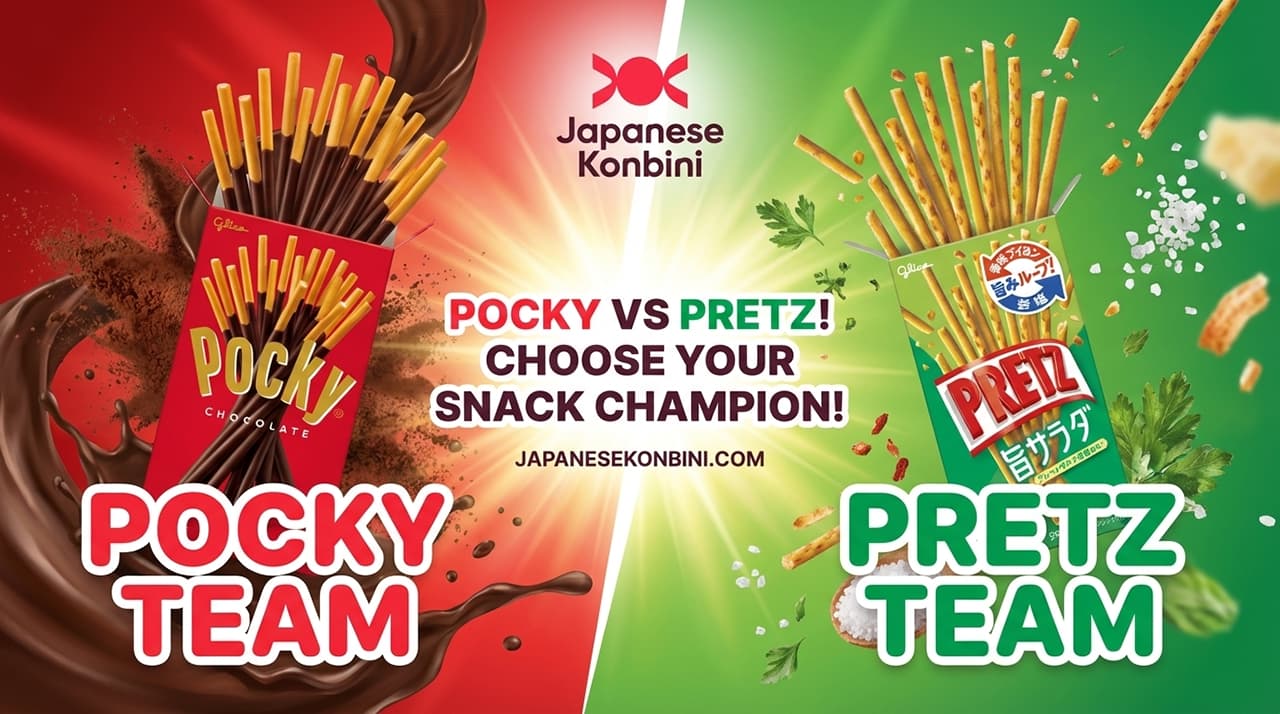
If you've ever browsed a Japanese snack store and found yourself staring at two very similar-looking boxes of thin biscuit sticks, you've encountered one of Japan's great snacking dilemmas. Pocky and Pretz are both made by Glico, both come in long rectangular boxes, both involve eating sticks. And that, more or less, is where the similarity ends.
The basics
Pocky (ポッキー) launched in 1966 and is Glico's global flagship product. A thin, crunchy biscuit stick coated in flavoured chocolate or cream. The name comes from the Japanese onomatopoeia pokkin — the sound the stick makes when you snap it. The uncoated end exists specifically so you can hold it without getting your fingers chocolatey, which is either thoughtful Japanese engineering or evidence that Glico's founder had very strong opinions about finger hygiene. Possibly both.
Pretz (プリッツ) launched in 1963 — three years before Pocky — and is the savoury sibling. No coating. Instead, Pretz sticks are baked with the flavour embedded directly into the biscuit itself: roasted, salty, sometimes spiced. They are thinner than Pocky, crunchier, and considerably less sweet.
The relationship between them is essentially this: Pocky is a dessert disguised as a snack. Pretz is a snack that has never pretended to be anything else.
The key differences
Coating vs no coating. This is the fundamental divide. Pocky without its coating is essentially just a Pretz. Glico has never confirmed this, but the circumstantial evidence is compelling.
Sweet vs savoury. Pocky leans sweet — even the "adult" varieties with darker chocolate are still dessert territory. Pretz goes savoury: tomato, roast, salted butter, salad. There is a Pretz flavour for basically every meal occasion except breakfast, and honestly the tomato one would probably work for that too.
Global vs Japan-rooted. Pocky is sold in over 30 countries and you can find it in most Asian grocery stores internationally. Pretz, by contrast, has remained far more Japan-focused — outside of specialist Japanese import stores, it's genuinely difficult to get hold of, which makes it one of those snacks that Japan-returnees specifically stock up on before flying home.
Occasions. Pocky is a sharing snack. There is a reason November 11th (11/11 — four sticks) is officially Pocky Day in Japan, with couples and friends snapping sticks together. Pretz you eat alone, at your desk, one stick at a time, in a state of focused enjoyment. Different energy entirely.
The Pocky flavours worth knowing
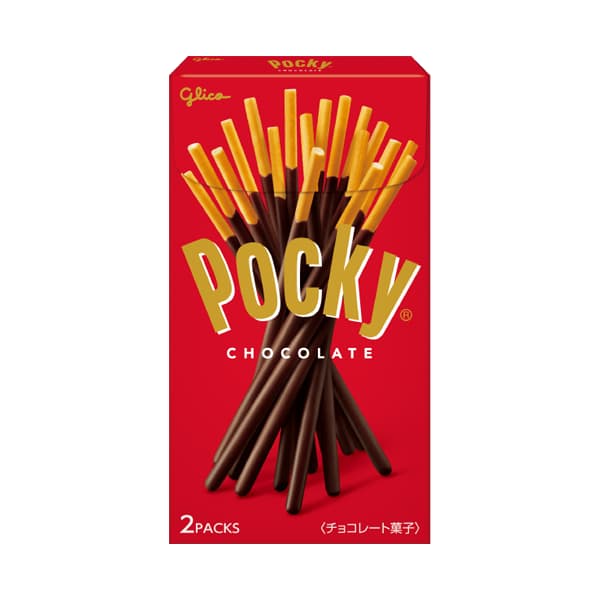
Glico Pocky Chocolate
The original, the benchmark, the one everything else is measured against. A thin pretzel-like biscuit stick coated in smooth milk chocolate. It sounds unremarkable and it is, in the best possible way — perfectly balanced, never cloying, and precisely engineered to make you eat the entire box without feeling like you've done anything wrong. If you've never had Pocky before, start here.
Shop Glico Pocky Chocolate →
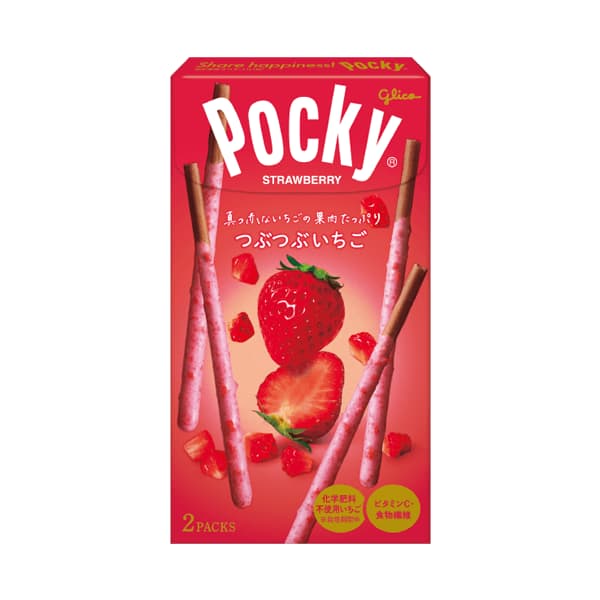
Glico Pocky Strawberry
The pink one. Coated in a sweet strawberry-flavoured cream that manages to taste genuinely of strawberries rather than strawberry-scented cleaning products, which is a harder achievement than it sounds. Japan's Pocky Strawberry has a distinctly softer, more delicate sweetness than the versions sold internationally — something in the formulation sits differently. The gateway Pocky for anyone who finds milk chocolate too heavy.
Shop Glico Pocky Strawberry →
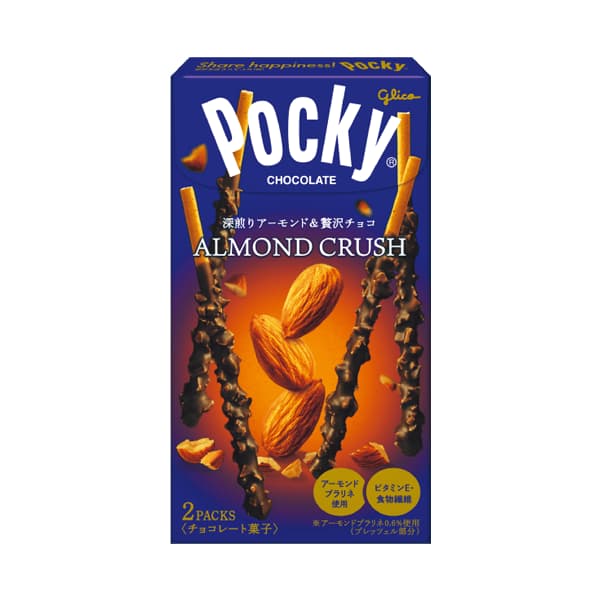
Glico Pocky Almond Crush
The grown-up in the range. The same chocolate-coated biscuit stick, but rolled in crushed almond pieces that add a proper crunch and a nutty depth the original doesn't have. It's the Pocky you buy when you want to feel like you're having a slightly sophisticated snack rather than eating a children's biscuit. Both things can be true simultaneously. This is Japan — the categories are more fluid here.
Shop Glico Pocky Almond Crush →
The Pretz flavours worth knowing
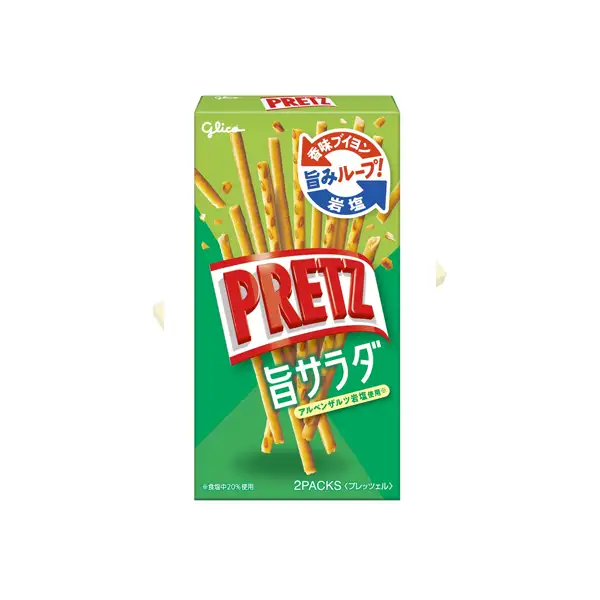
Glico Pretz Salad
The classic entry point. "Salad" flavour in Japan — as with Jagariko — means something closer to a light, creamy, herb-seasoned profile rather than anything involving actual leaves. Pretz Salad is the most approachable of the range: subtly savoury, gently seasoned, and dangerously easy to eat in quantity. The one to start with if you've never had Pretz before.
Shop Glico Pretz Salad →
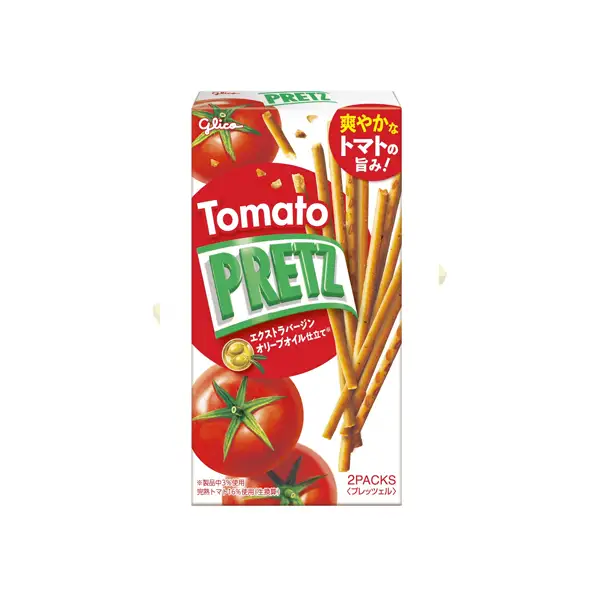
Glico Pretz Tomato
Arguably the most iconic Pretz flavour and the one most likely to convert a Pocky loyalist to the savoury side. The tomato seasoning is rich, slightly sweet, and deeply umami — closer to a concentrated tomato sauce than a fresh tomato, which sounds like a criticism but is absolutely not. It's the flavour that makes you realise Pretz isn't a lesser version of Pocky. It's a completely different snack doing a completely different job, and doing it very well.
Shop Glico Pretz Tomato →
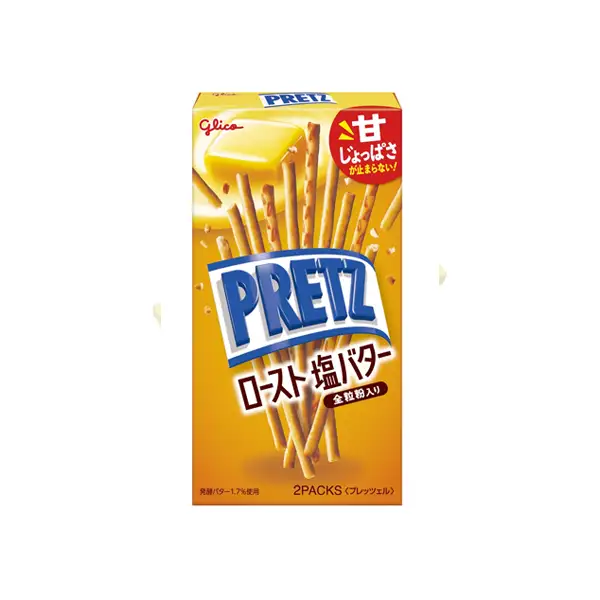
Glico Pretz Roasted Salted Butter
The most indulgent of the three. Roasted, slightly smoky, with a rich butter finish that lingers just long enough to make you reach for another stick. This is the Pretz you eat at your desk at 3pm when you need something savoury and substantial without committing to an actual meal. It pairs exceptionally well with coffee, which is a combination that sounds dubious until you try it.
Shop Glico Pretz Roasted Salted Butter →
So which is better?
Wrong question. They solve different problems. Pocky is sweet, shareable, and the kind of snack you offer to other people. Pretz is savoury, personal, and the kind of snack you eat quietly while pretending to work. Both are made by the same company, both are iconic, and both are now available to ship directly from Tokyo.